Panel 1 of 38
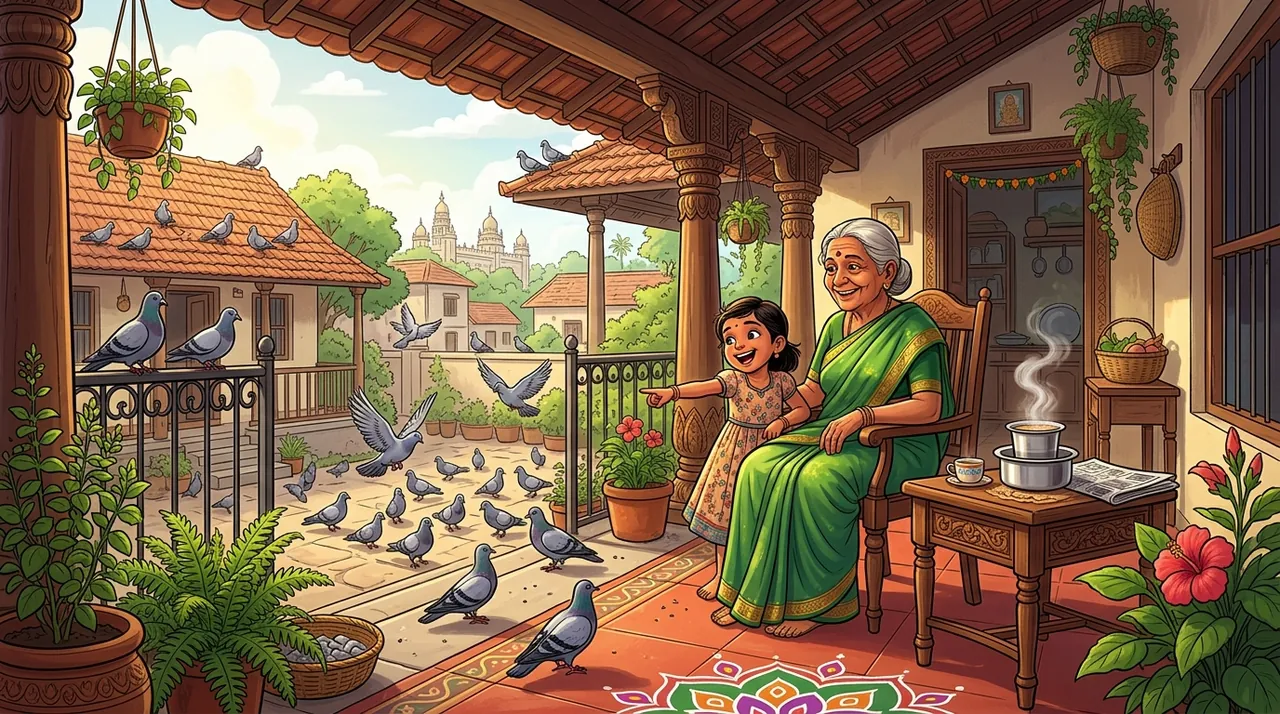
📜 On a radiant morning in Mysore (Year 2026), filter coffee steamed on Ajji’s veranda as the family prepared for New Year celebrations.
To fulfill a 10,000-box New Year order, Master Chef Ramananna raises ₹1 Lakh without a loan by selling 1,000 new shares to his neighbours! Dev and Kavya buy their first share, and learn about dividends, risk and long-term compounding.
📜 On a radiant morning in Mysore (Year 2026), filter coffee steamed on Ajji’s veranda as the family prepared for New Year celebrations.
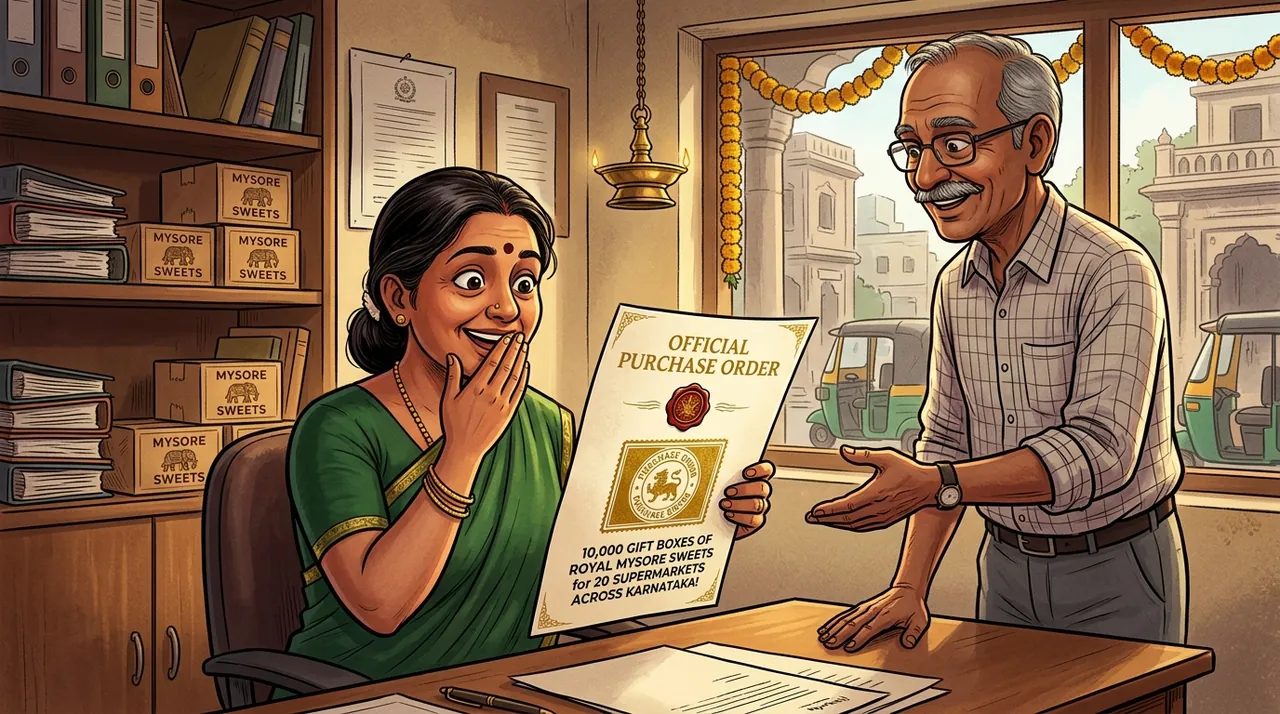
📜 A formal letter arrived with golden stamps: "Official Purchase Order: 10,000 Gift Boxes of Royal Mysore Pak for 20 Supermarkets across Karnataka!"
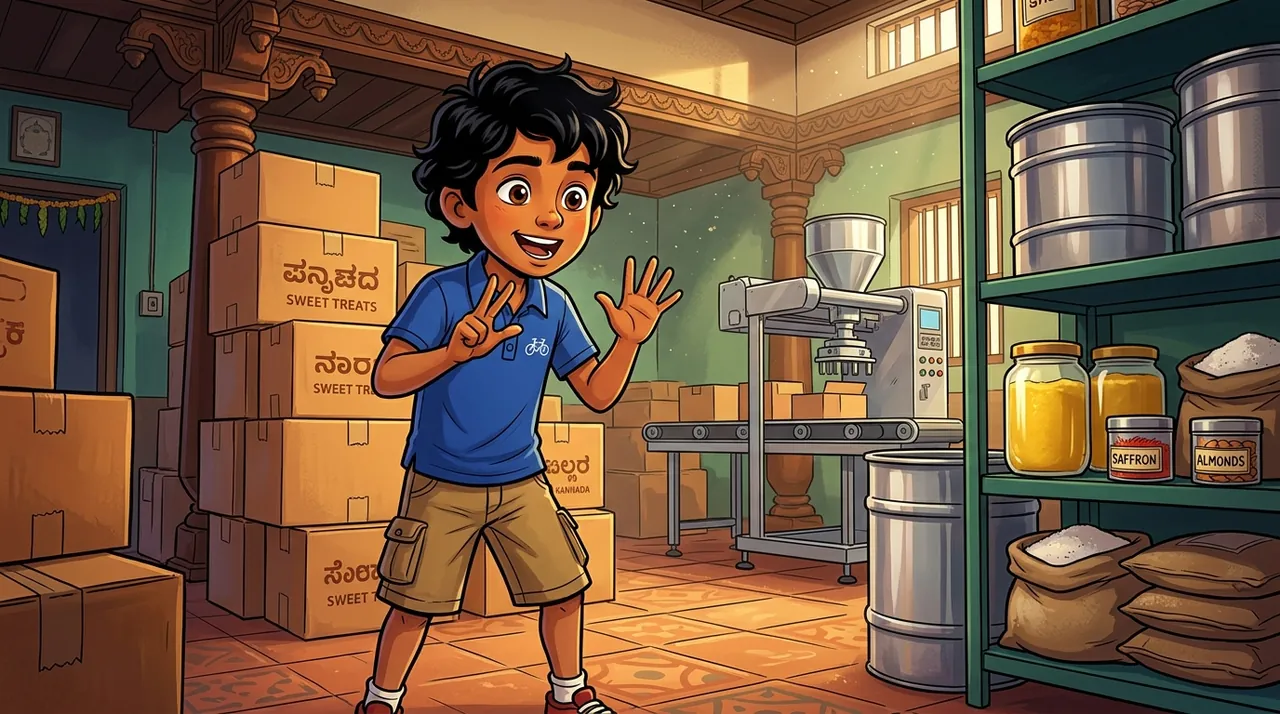
📜 Dev calculated the immense scaling capital on his fingers with wide eyes.

"10,000 boxes means we need ₹1,00,000 upfront to buy bulk ghee, saffron, and automated packaging machines!"
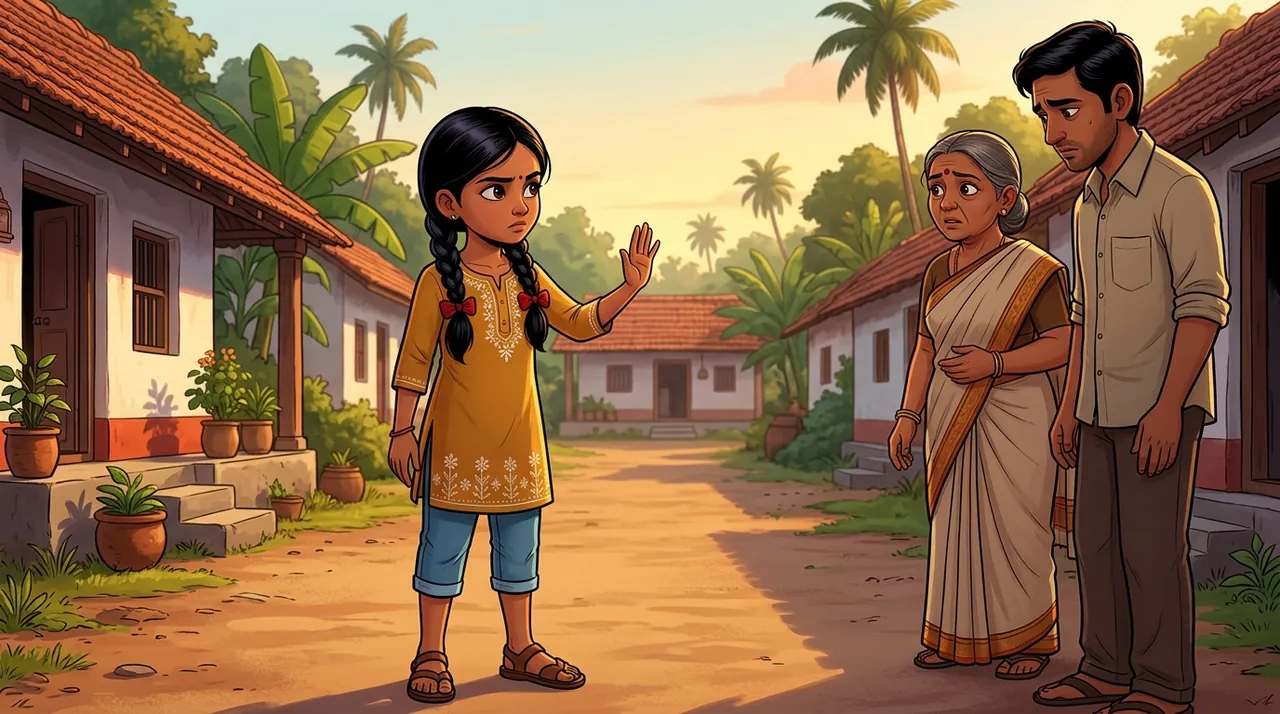
📜 Kavya frowned, remembering how costly borrowing can be.
"Remember Chapter 6! A ₹1 Lakh loan at 15% a year means paying about ₹4,850 every month for two years, about ₹16,000 of it interest, even if sales are slow. Is there another way to grow?"
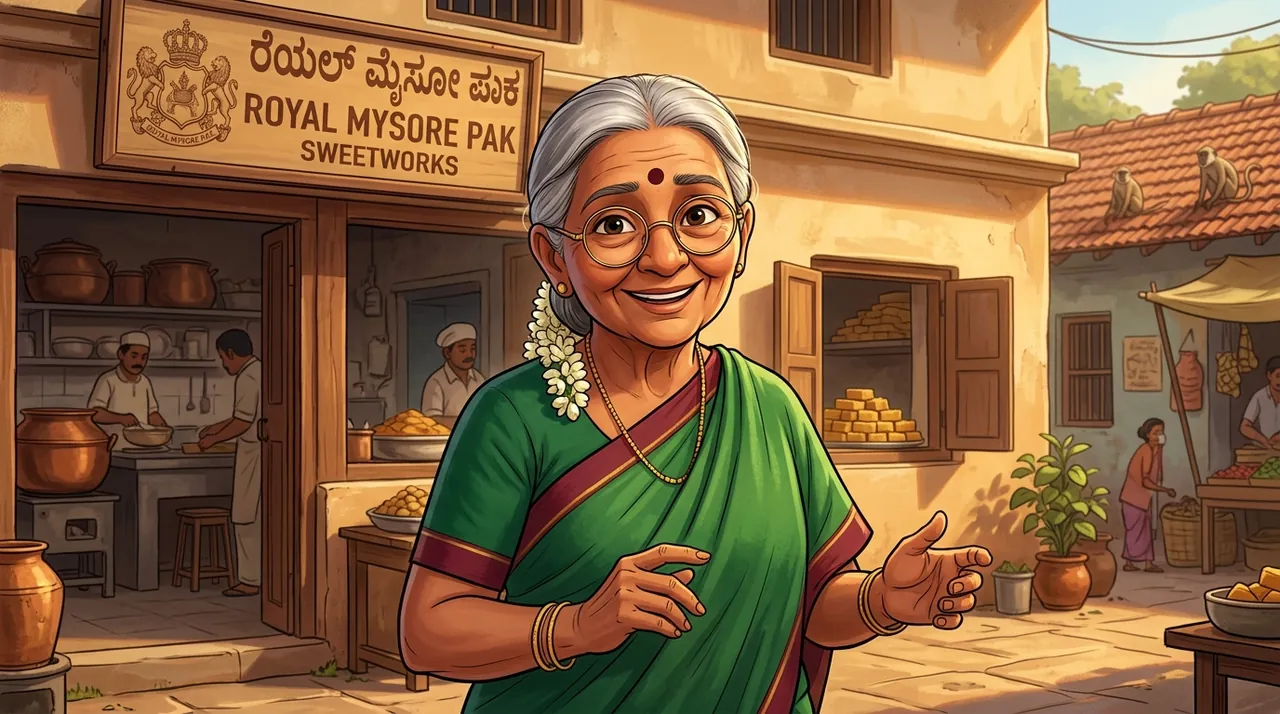
📜 Ajji smiled with wisdom, leading the way to the sweetworks.
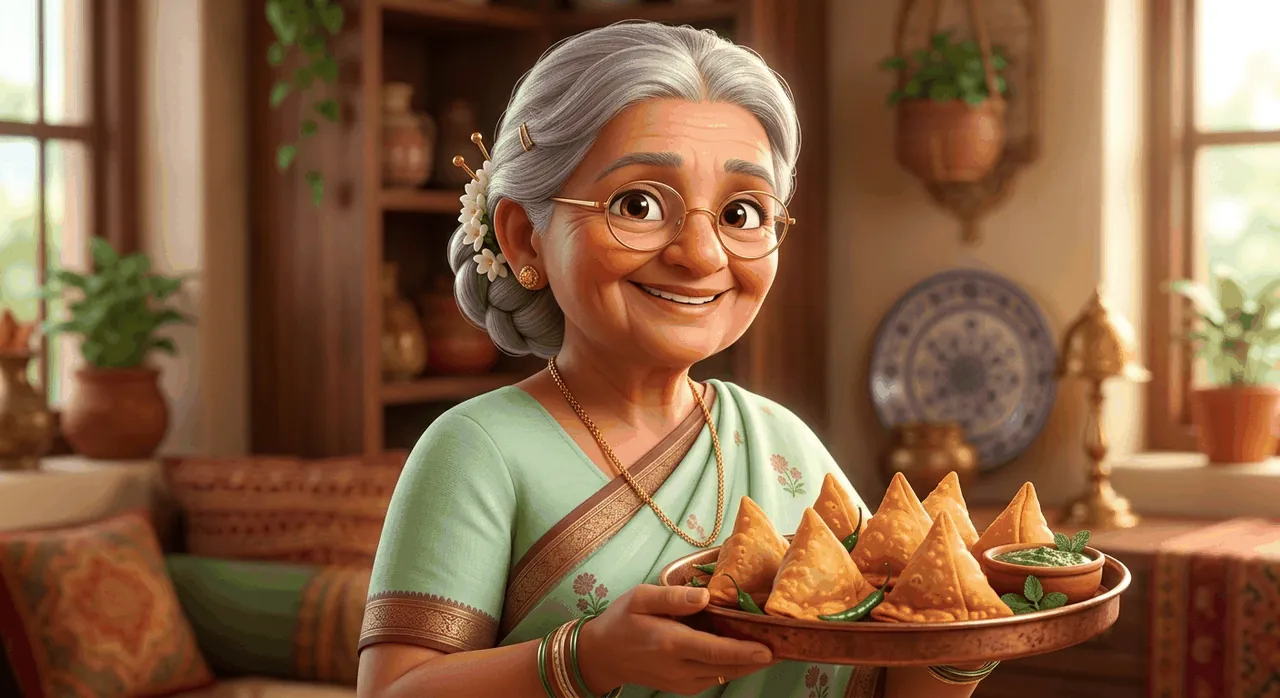
"Let us visit Master Chef Ramananna at the Royal Sweetworks! He has a visionary plan to scale without taking a single rupee of debt!"
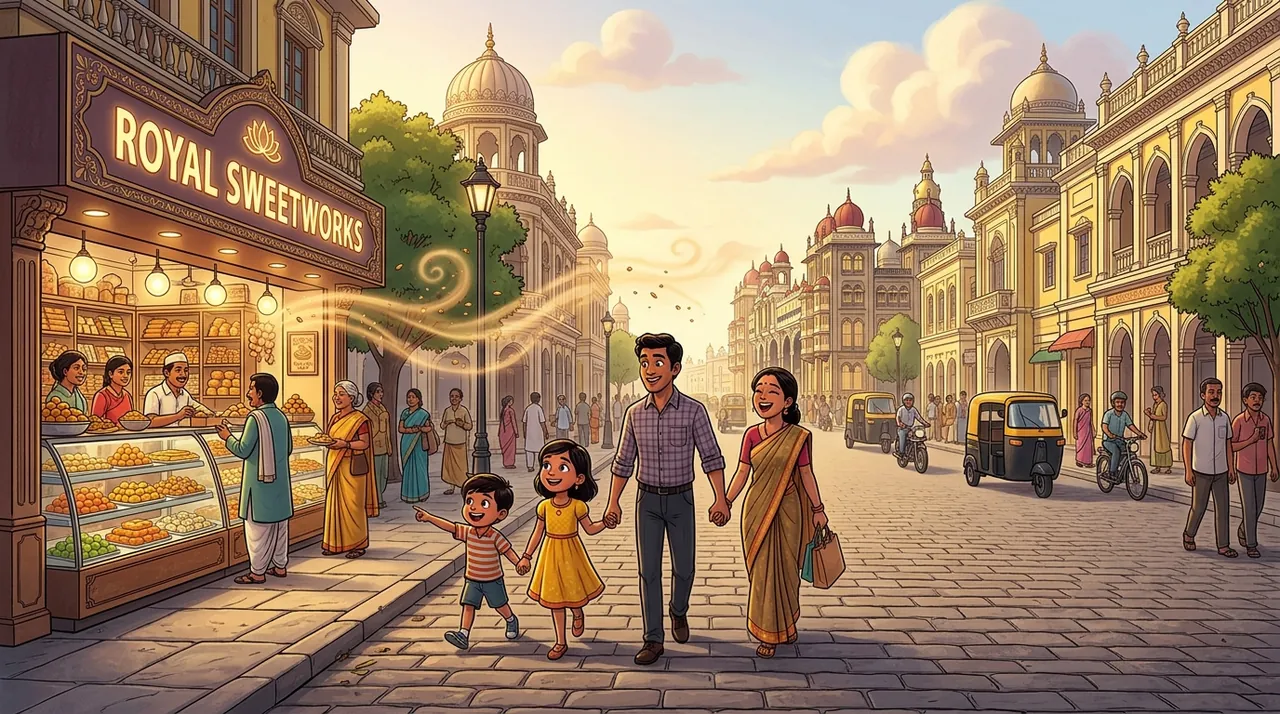
📜 Walking along the heritage avenue, the air smelled rich with roasted gram flour, pure cardamom, and golden melted ghee.
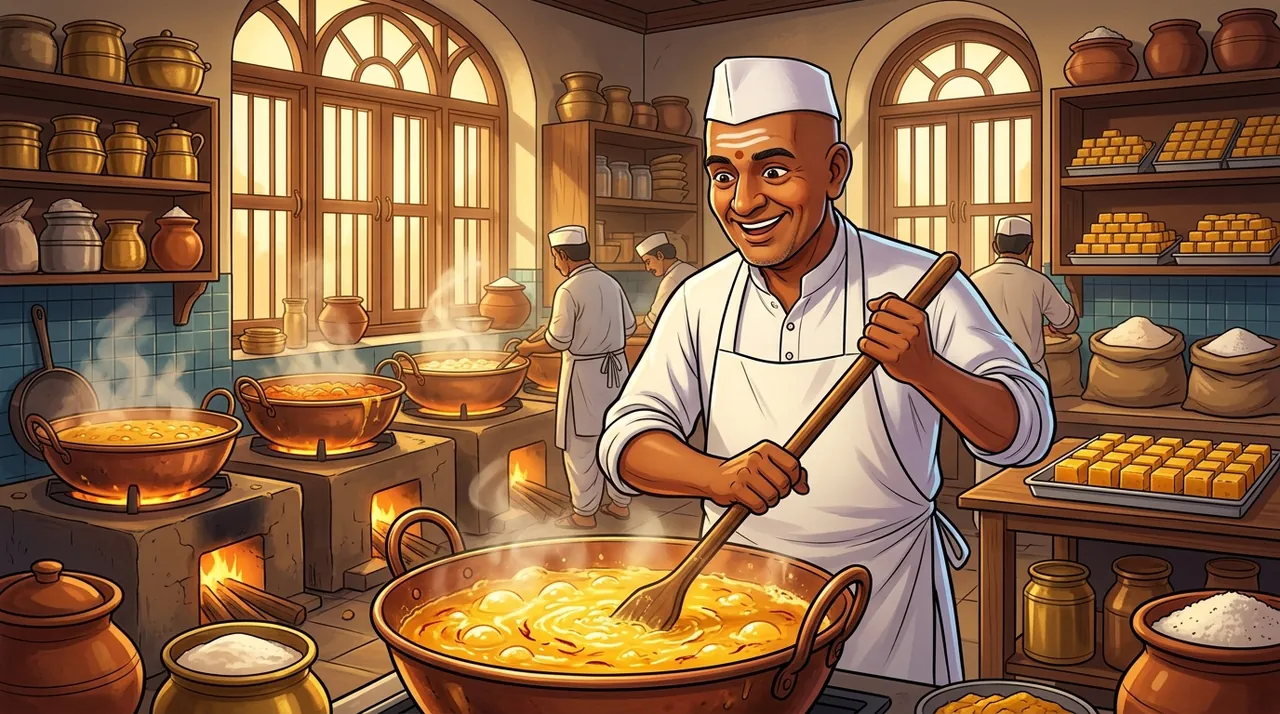
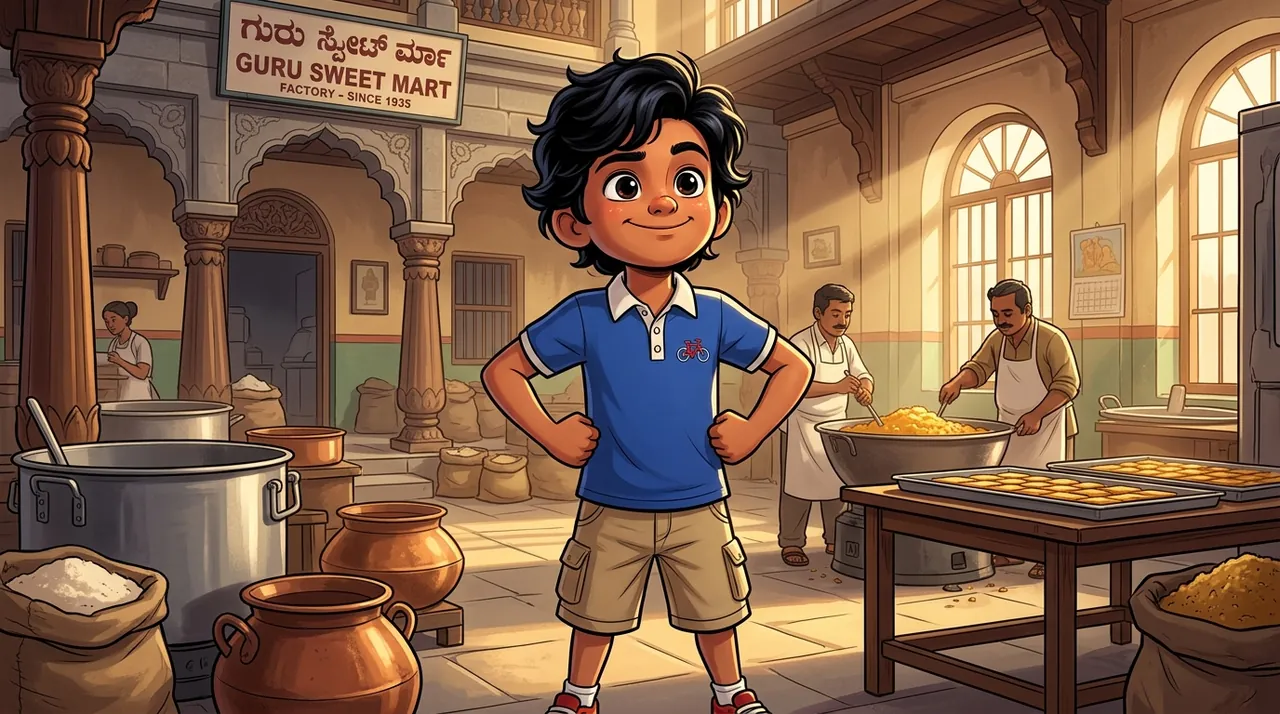
📜 Inside Ramananna’s traditional kitchen, massive gleaming copper cauldrons bubbled with molten golden Mysore Pak syrup.
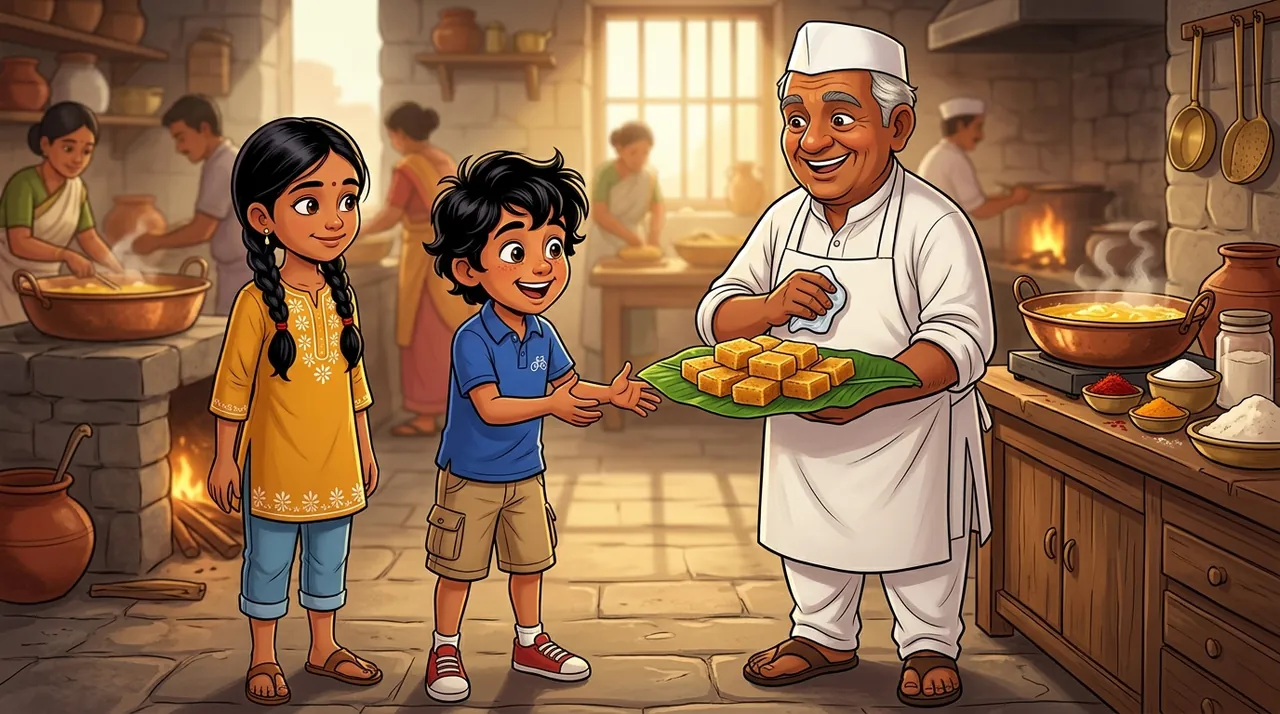
📜 Ramananna served melt-in-the-mouth sweet squares on fresh banana leaves.
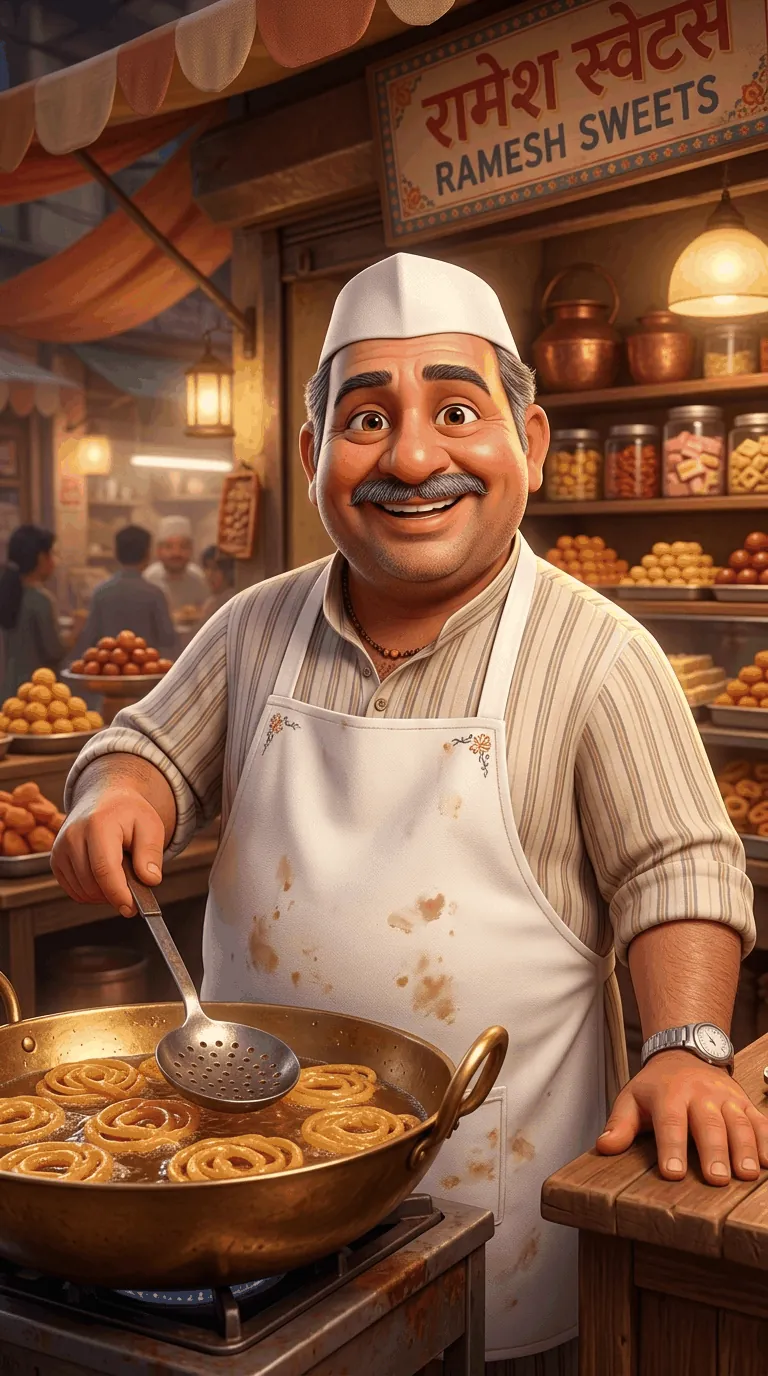
"Namaskara little champions! Taste this royal saffron Mysore Pak straight from the golden cauldron!"
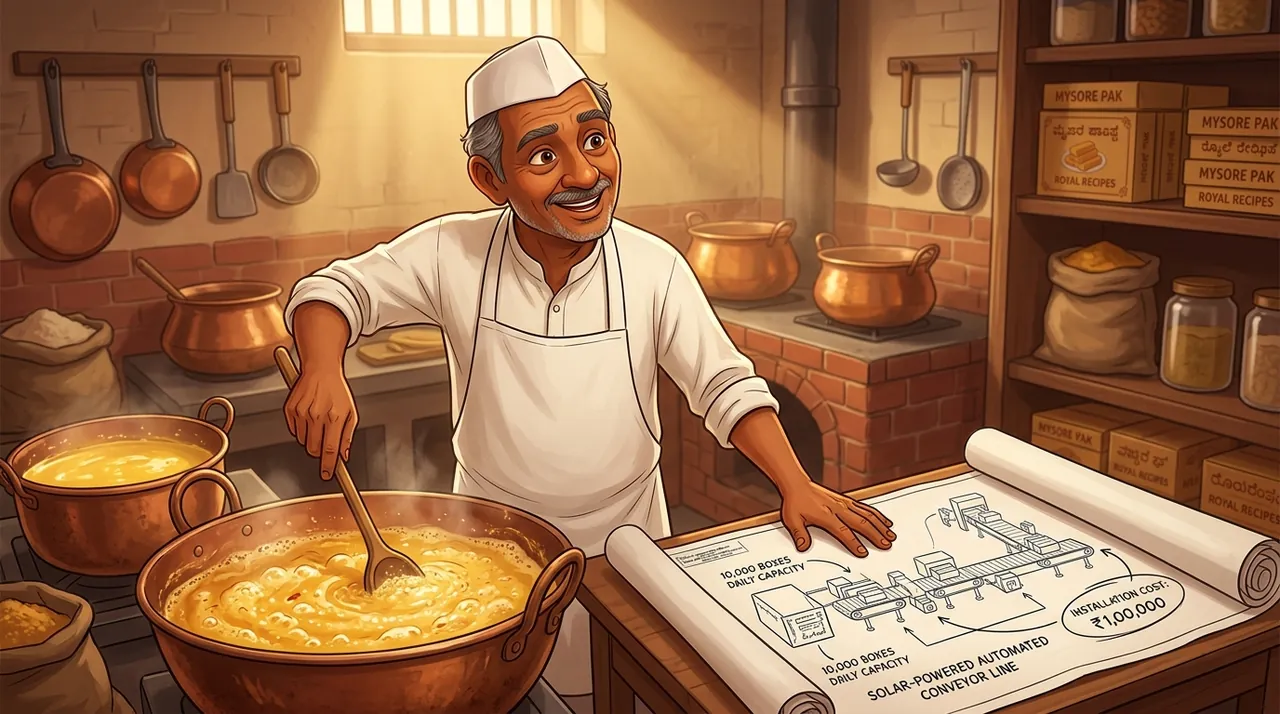
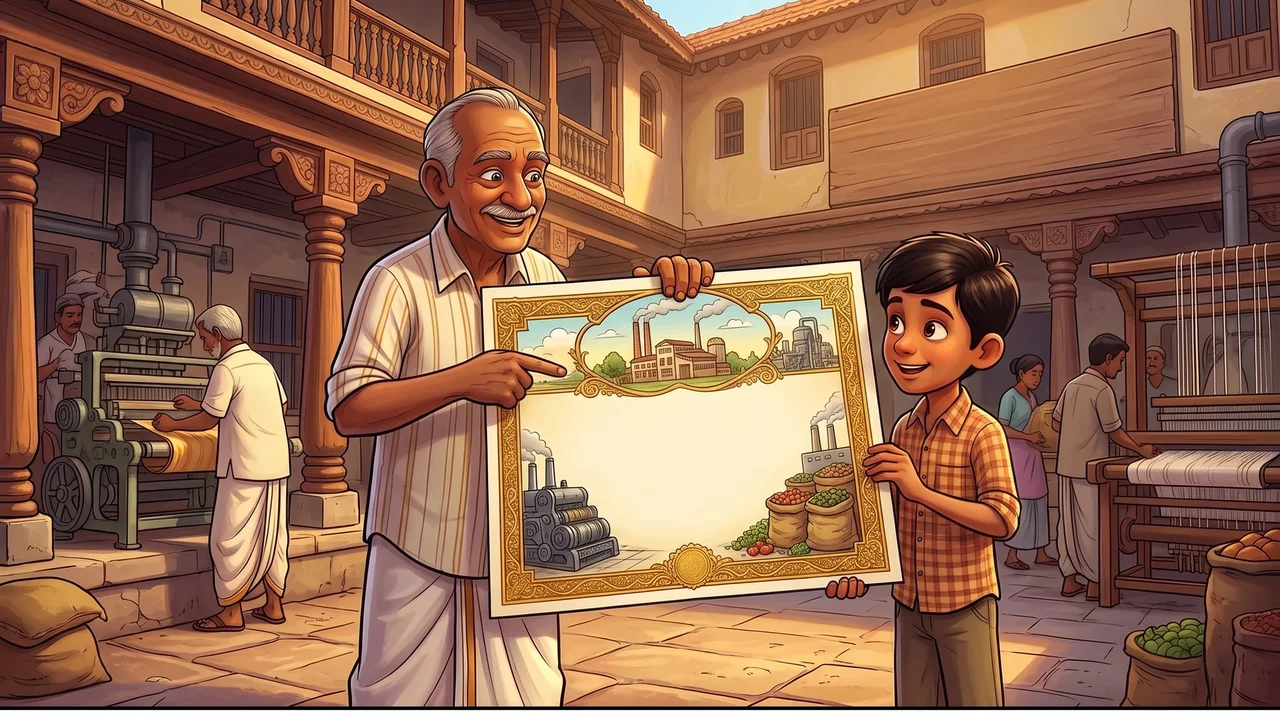
📜 Ramananna unrolled the factory expansion blueprints.
"I have the secret royal recipe, but we need ₹1,00,000 to install a solar-powered automated conveyor line to pack 10,000 boxes cleanly!"
📜 Dev asked innocently.
"Why don’t we borrow ₹1 Lakh from a bank or moneylender?"
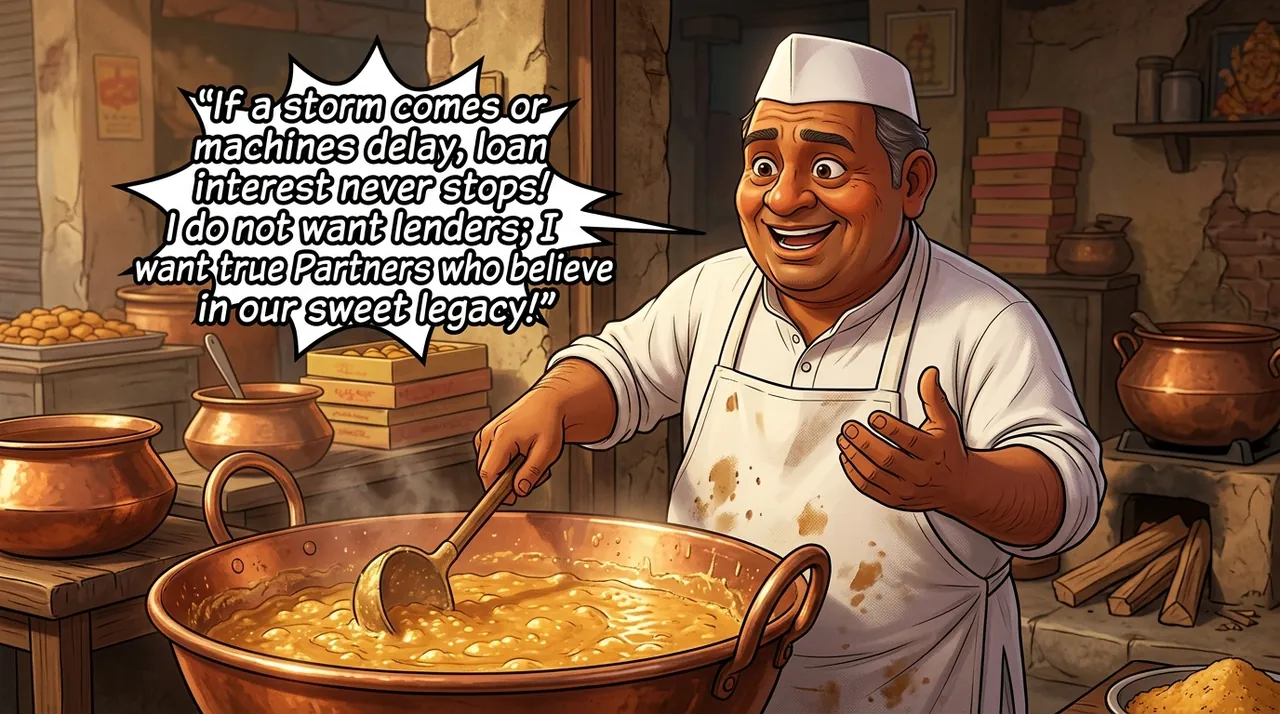
📜 Ramananna explained why he preferred partners to a loan for this big new step.
"A loan is fine for something sure to pay back, like Somanna’s motor. But a whole new factory line is a big risk: if rain delays supplies or machines halt, loan repayments still come due! I would rather have Co-Owners who share both the risk and the growth!"
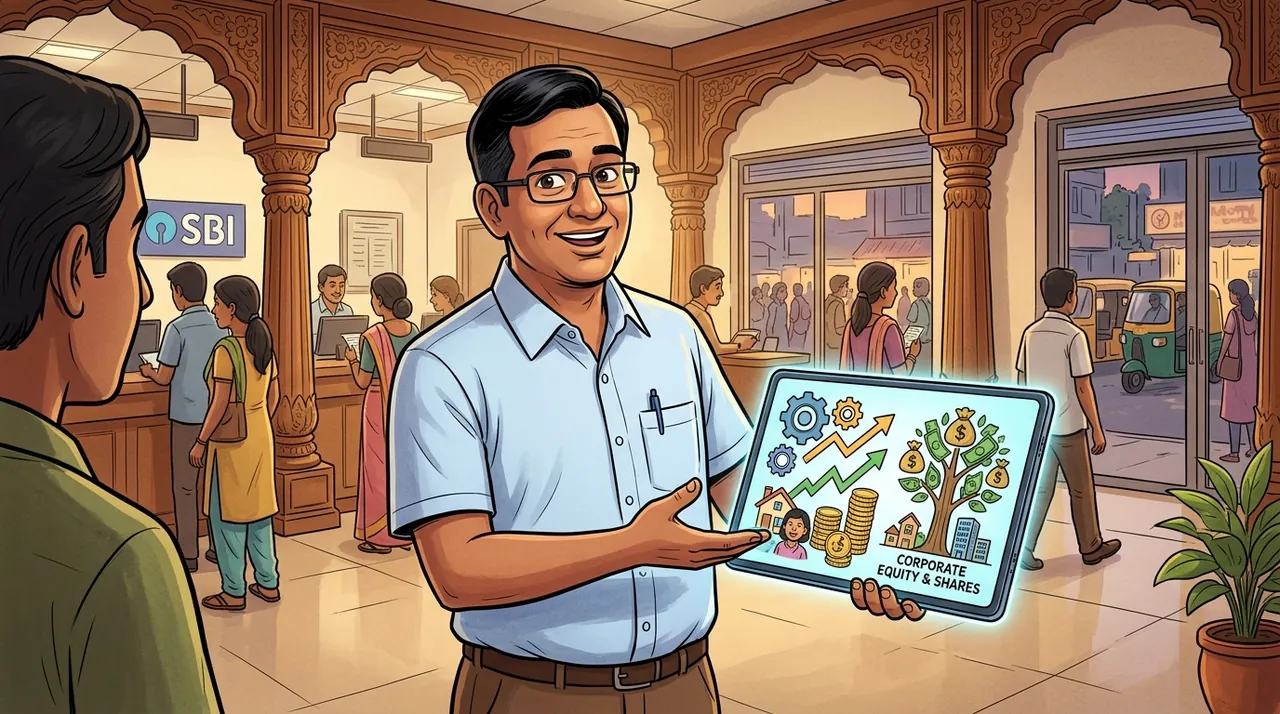
📜 Manager Sharmaji set up his digital display board.

"Namaskara! Let me explain the greatest wealth-creation engine in human history: The Stock Market and Equity Ownership!"
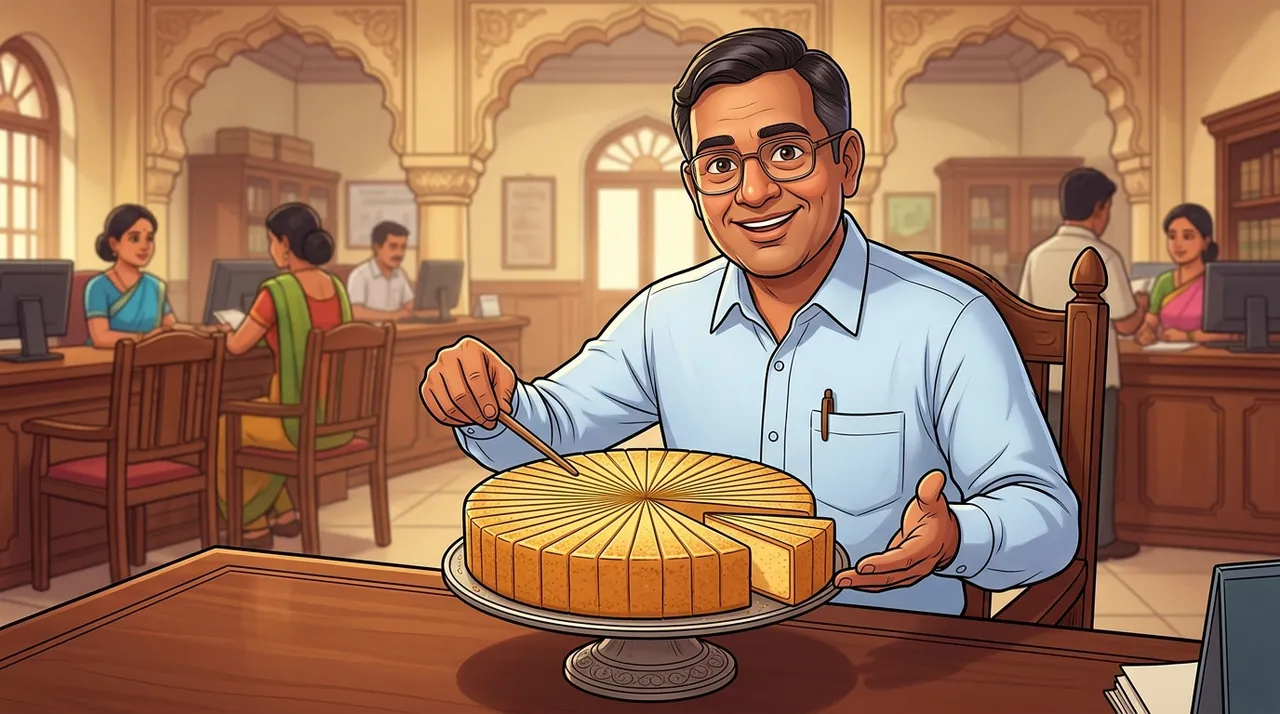
📜 Sharmaji illustrated the fractional ownership model.
"Imagine The Royal Sweet Company as a giant cake. Today it is worth ₹1,00,000, cut into 1,000 slices called "Shares" of ₹100 each, all owned by Ramananna. To raise ₹1,00,000 more, the company bakes 1,000 NEW slices and sells them at ₹100 each. Afterwards there are 2,000 slices: Ramananna still owns half, and the new co-owners own the other half!"
📜 The true definition of equity ownership was unveiled.
"If you buy 10 Shares for ₹1,000, you are NOT lending money. You own 10 of the 2,000 slices: 0.5% of the whole sweet factory, its machines, and its future profits, and its losses too!"
📜 Dev’s eyes sparkled as he grasped the power of equity.
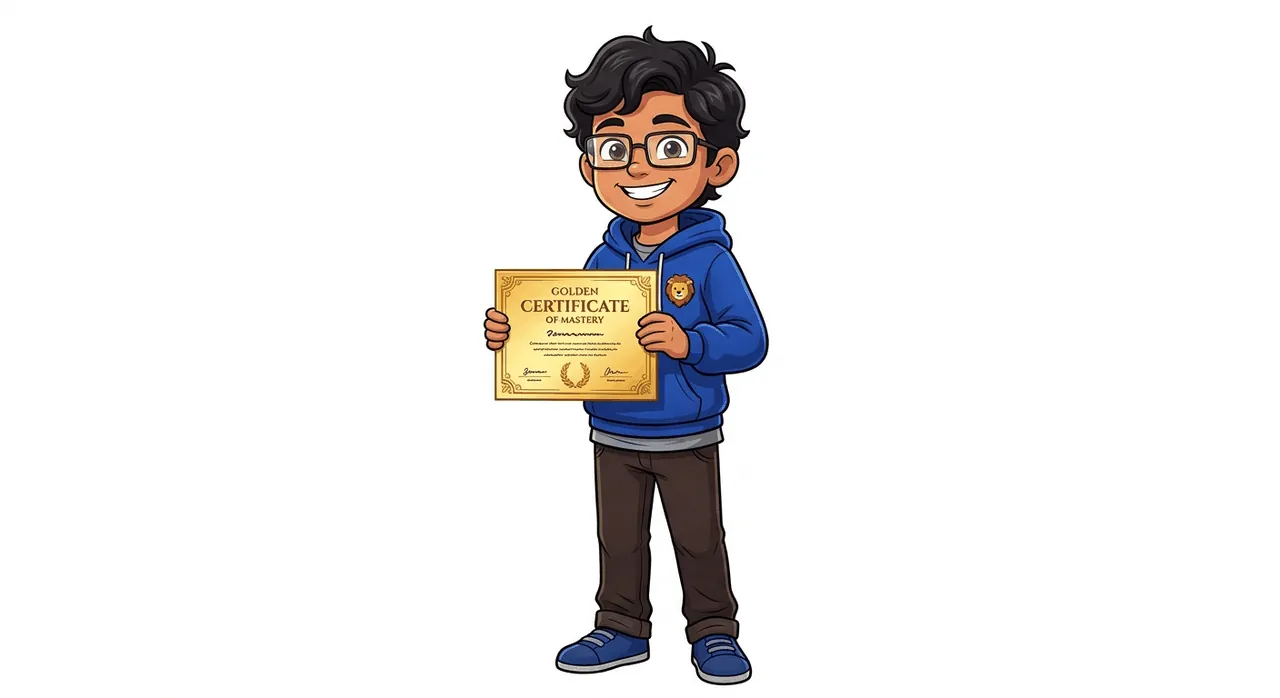
"So whenever a family in Bangalore or Mysore buys a box of sweets, a piece of that profit flows directly to ME as a real Co-Owner?!"
FinJunior interactive quests are adapted and gamified with gratitude and inspiration from Zerodha’s Rupee Tales and Varsity Junior educational initiatives to champion early financial literacy for children across India.